Coping in 2009: 5 Ways Dealers Survived the Crisis
Forced to get creative this year, integrators took on commercial, solar, DIY, mergers, foreclosures and more
We hate to keep reminding CE pros that 2009 stunk, but the economic crisis was certainly the biggest story of the year.
And it wasn't just the trunk slammers that got burned. We lost several of the industry's top names including Baumeister (Chicago) and Genesis A/V (Irvine, Calif.).
Other companies have managed to weather the crisis through mergers and acquisitions, diversification and other creative solutions.
Here we highlight some of the ways that surviving dealers managed to cope in 2009.
Several integrators merged with former competitors in order to share costs, customers and best practices.
Earlier this year, Home Systems and Intrahome Technologies, two New Jersey-based integrators, merged to become Pompton Plains-based Intra Home Systems, LLC.
Back then, Ralph Scrofani, principal of Home Systems, said, "Where our company has strengths in processes and project execution, the other has the ability to move quickly toward project opportunities and put its network of relationships to work in securing the necessary meetings with the right people. It was perfect."
The merger between Maryland dealers Questron and Home Safe Security has been "really effective" in terms of cost savings, according to Questron founder George Hall.
Both companies served similar geographic areas. Now they no longer have to compete for clients in the Middle Atlantic, allowing the combined company to save on marketing costs.
The two companies also saved by eliminating a costly showroom. "We're consolidating, and it's saving us on real estate costs," says Hall.
At least two integrators – both in areas hit hard by the recession – faced the foreclosure crisis head on.

Commercial | Home Health Tech | Retrofit | Smart Energy | Digital Content | Recurring Revenue
March 25-27, 2010, Orlando, Fla.
Register by Dec. 31 and save $50.
http://www.ehxweb.comGreg Simmons, CEO of Las Vegas-based Eagle Sentry, says individuals are snapping up foreclosed homes for a song … with money to spare for goodies.
"They're getting these houses at a steal, and they're paying in cash," Simmons says. "We've got a customer right now that just moved in and doesn't know what the electronics do. It's a huge business right now."
Eagle Sentry markets heavily to households in high-end neighborhoods, with the message that new homeowners can make an existing system "work" with a relatively small investment.
In its marketing pieces Eagle Sentry uses the Crestron and Lutron brands so that potential customers will associate Sentry's services with products they may have inherited.
For his part, Tony Tangalos of Scottsdale, Ariz.-based Simply Home Cinemas (SHC), addresses the sensitive question of foreclosure directly with his clients.
For a fee, SHC will uninstall the homeowner's rightful property, store it in SHC's facility, and resell it to the home's buyers or other clients. The original owner gets the proceeds from the equipment sale, and SHC is compensated for service and upsells.
DIY products used to be taboo for high-end integrators, but many of them are finding new business with devices like Sonos and Apple TV.
Ric Clark of Jamieson's Audio/Video in Toledo, Ohio, says, "I don't know what we would've done this year if we didn't have Sonos."
With store traffic down and high-end installations stalled, Jamieson's finds Sonos to be a great vehicle for connecting with past customers and building a new client base.
Because of its high volume with Sonos, Jamieson's has established an expertise in the Sonos line and digital content in general, allowing installers to install a $1,500 package in about two hours, including the time it takes to train the customer and build basic playlists for them.
Plus, the company often upsells customers on speakers, NAS drives and other hardware.
Other integrators are finding revenue in such commodities as Apple TV.
Audio Video Planners, Oakdale, Minn., charges a flat fee of about $250 to integrate Apple TV into an entertainment system.
"That would be for creating an iTunes account, pulling some of their media and burning a couple of disks to show them how," says AVP's David Ault.
Clever new control devices for Apple TV – most notably Autonomic's software for two-way control and feedback – give homeowners a reason to add an automation system to their A/V set-up.
And it wasn't just the trunk slammers that got burned. We lost several of the industry's top names including Baumeister (Chicago) and Genesis A/V (Irvine, Calif.).
Other companies have managed to weather the crisis through mergers and acquisitions, diversification and other creative solutions.
Here we highlight some of the ways that surviving dealers managed to cope in 2009.
1. Mergers & Acquisitions
Several integrators merged with former competitors in order to share costs, customers and best practices.
Earlier this year, Home Systems and Intrahome Technologies, two New Jersey-based integrators, merged to become Pompton Plains-based Intra Home Systems, LLC.
Back then, Ralph Scrofani, principal of Home Systems, said, "Where our company has strengths in processes and project execution, the other has the ability to move quickly toward project opportunities and put its network of relationships to work in securing the necessary meetings with the right people. It was perfect."
The merger between Maryland dealers Questron and Home Safe Security has been "really effective" in terms of cost savings, according to Questron founder George Hall.
Both companies served similar geographic areas. Now they no longer have to compete for clients in the Middle Atlantic, allowing the combined company to save on marketing costs.
The two companies also saved by eliminating a costly showroom. "We're consolidating, and it's saving us on real estate costs," says Hall.
2. Tackling Foreclosures
At least two integrators – both in areas hit hard by the recession – faced the foreclosure crisis head on.

Commercial | Home Health Tech | Retrofit | Smart Energy | Digital Content | Recurring Revenue
March 25-27, 2010, Orlando, Fla.
Register by Dec. 31 and save $50.
http://www.ehxweb.com
"They're getting these houses at a steal, and they're paying in cash," Simmons says. "We've got a customer right now that just moved in and doesn't know what the electronics do. It's a huge business right now."
Eagle Sentry markets heavily to households in high-end neighborhoods, with the message that new homeowners can make an existing system "work" with a relatively small investment.
In its marketing pieces Eagle Sentry uses the Crestron and Lutron brands so that potential customers will associate Sentry's services with products they may have inherited.
For his part, Tony Tangalos of Scottsdale, Ariz.-based Simply Home Cinemas (SHC), addresses the sensitive question of foreclosure directly with his clients.
For a fee, SHC will uninstall the homeowner's rightful property, store it in SHC's facility, and resell it to the home's buyers or other clients. The original owner gets the proceeds from the equipment sale, and SHC is compensated for service and upsells.
3. Embracing DIY
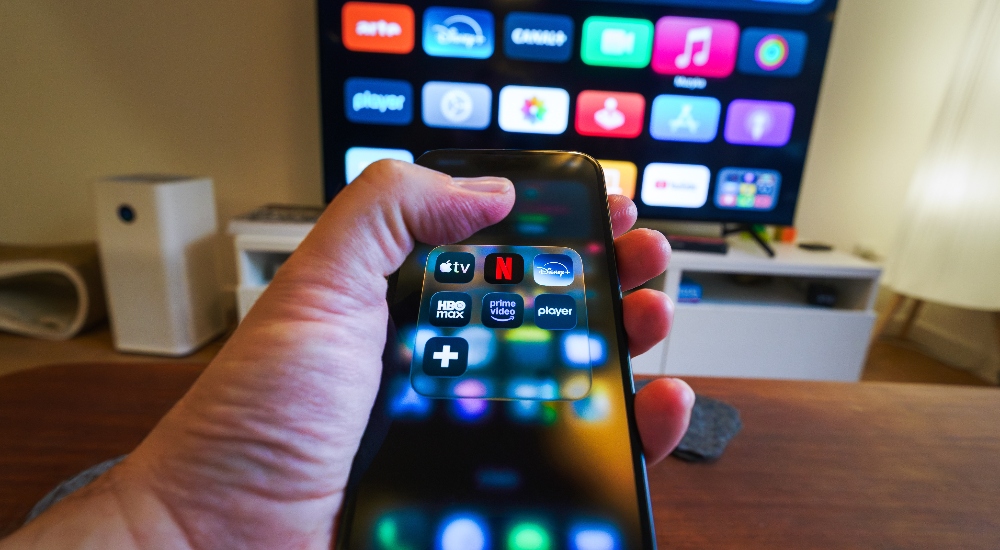
DIY products used to be taboo for high-end integrators, but many of them are finding new business with devices like Sonos and Apple TV.
Ric Clark of Jamieson's Audio/Video in Toledo, Ohio, says, "I don't know what we would've done this year if we didn't have Sonos."
With store traffic down and high-end installations stalled, Jamieson's finds Sonos to be a great vehicle for connecting with past customers and building a new client base.
Because of its high volume with Sonos, Jamieson's has established an expertise in the Sonos line and digital content in general, allowing installers to install a $1,500 package in about two hours, including the time it takes to train the customer and build basic playlists for them.
Plus, the company often upsells customers on speakers, NAS drives and other hardware.
Other integrators are finding revenue in such commodities as Apple TV.
Audio Video Planners, Oakdale, Minn., charges a flat fee of about $250 to integrate Apple TV into an entertainment system.
"That would be for creating an iTunes account, pulling some of their media and burning a couple of disks to show them how," says AVP's David Ault.
Clever new control devices for Apple TV – most notably Autonomic's software for two-way control and feedback – give homeowners a reason to add an automation system to their A/V set-up.
A Look Back at 2009
![]() | The Most Popular Stories of 2009 From the fall of Tweeter, fighting over source code, and the death of plasma TVs, we round up the most popular stories of 2009. 10 Most Controversial Stories of 2009 With Lutron suing Crestron, Kaleidescape losing a big case, Amazon selling SpeakerCraft and Walmart selling installation, it wasn't a boring year. 10 Most Popular Photo Galleries of 2009 Whether it was ways to mount a flat-panel TV, great looking racks or horrific wiring jobs, here are your favorite photo galleries of 2009. A Year's Worth of Neat-O Installations Neat-O is one of your favorite features on CE Pro. Here's a recap of the last year's worth. Top Products of 2009 Bob Archer and Steve Crowe round up their top products of 2009. Coping in 2009: 5 Ways Dealers Survived the Crisis Forced to get creative this year, integrators took on commercial, solar, DIY, mergers, foreclosures and more. Discuss: Remembering 2009 What will you remember about this difficult year? | |
Subscribe to the CE Pro Newsletter
Read more Commercial stories
Eragy Launches Control4 Energy Management AppsUTC Sells Commercial Fire, Security Installation Business
Bringing Building Automation to Residential Projects
ADT Commercial Changes Name to Tyco Integrated Security
Revenues from Commercial Automation Installs to Double By 2021
More in Commercial
Article Topics
News · Business Resources · Events · EHX Spring · Commercial · Home Health · Recession ·About the Author

Julie Jacobson, Editor-at-large, CE Pro
Julie Jacobson is co-founder of EH Publishing and currently spends most of her time writing for CE Pro, mostly in the areas of home automation, networked A/V and the business of home systems integration. She majored in Economics at the University of Michigan, earned an MBA from the University of Texas at Austin, and has never taken a journalism class in her life. Julie is a washed-up Ultimate Frisbee player with the scars to prove it. Follow her on Twitter @juliejacobson.
1 Comments (displayed in order by date/time)
Page 1 of 1 comment pages


Big up COPE2, I love graffiti, even in High end home audio, COPE2 gets up!